


It is often hard to identify the factors guiding Donald Trump a month into the US and Israel's campaign of military action on Iran.
But it is apparent he has an eye on the global crude markets.
A word – or tweet – from the American leader concerning his intentions used to spark significant moves in prices, as investors reacted to signs the conflict could intensify or come to an end.
But in the last week, investors seem to be becoming increasingly doubtful about the impact of his remarks.
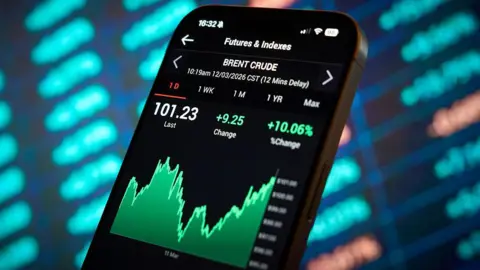
The price of oil was valued at approximately $72 a barrel (bbl) before 28 February, when the military action against Iran started.
Last week, it reached a high of $118 a barrel on 19 March and by Friday afternoon was trading at around $112 – significantly higher than its pre-war price.
Here are several examples from the last month where Trump and the markets appear to have influenced one another – with mixed impacts.
Navigate with the arrow to move to the next slide.
"Energy prices have become a proxy for broader geopolitical and economic risks, spiking when Trump's rhetoric grows aggressive and falling back when his rhetoric softens," says one market analyst.
He states that financial markets are understandably reactive to those signals, given the big financial dangers that come with climbing oil prices.
"Market participants are trying to price real volatility," he says. "Markets can appear jumpy or confused, but what they're actually attempting is navigating geopolitical risk in real time, with oil positioned directly at the centre of that."
But, it can be tough for investors to figure out how to trade, given that a portion of Trump's statements appear designed to affecting oil prices, rather than articulating policy, argues another financial strategist.
"As the saying goes, the initial victim of war is clarity," he remarks. "It is likely much of the communication back-and-forth around successful negotiations, and the opposite, very much are centred around simply shifting the market price of oil."
Market Reactions Become Increasingly Muted
On Thursday, minutes after US equity markets saw their biggest drop since the beginning of the conflict with Iran, Trump announced discussions with Iran were going "quite positively" and he was putting off military strikes on Iran's oil facilities until at least 6 April.
Yet, the oil price continued to rise.
One market analyst points out that market reactions are "becoming more muted" because of the "significant disconnect" between Trump's reassurances and the absence of acknowledgement from Tehran.
"Given the current situation, many market watchers do not foresee an imminent conclusion to the hostilities and financial markets continue to be nervous."
Another market expert notes investors have also grown used to Trump "frequently changing tack at indications of geopolitical, stock market or financial stress".
"We are seeing a degree of wariness, or even frank cynicism, creeping in at the edges," he concludes.


